
Introduction
The issue of invasive species in California has become one of the most significant environmental challenges facing the state today. From rivers and forests to agricultural lands and urban areas, non-native plants and animals continue to alter natural ecosystems in ways that scientists, conservationists, and local communities are working hard to understand and manage. California’s unique climate, diverse landscapes, and global trade connections make it particularly vulnerable to biological invasions.
Over the years, invasive species have affected native wildlife, damaged crops, increased wildfire risks, and placed enormous pressure on public resources. While many of these species arrived accidentally, others were intentionally introduced for agriculture, landscaping, or recreational purposes. Their impact, however, has often extended far beyond their original purpose.
Understanding the growing problem of invasive species in California is essential for protecting the state’s rich biodiversity and ensuring healthy ecosystems for future generations.
H2: Understanding Invasive Species
An invasive species is a non-native organism that spreads rapidly and causes harm to the environment, economy, or human health. Not every introduced species becomes invasive. Many remain relatively harmless, while others adapt so successfully that they outcompete native species and disrupt ecological balance.
California is home to thousands of native plants and animals that evolved together over millions of years. When invasive species enter these environments, they can change food chains, alter habitats, and reduce the survival chances of native wildlife.
The challenge becomes even greater because invasive species often lack the natural predators and diseases that control their populations in their original habitats. As a result, they can reproduce quickly and spread across large areas.
H2: Why California Is Vulnerable
California’s geographic diversity makes it one of the most biologically rich regions in North America. The state contains coastal wetlands, deserts, mountains, grasslands, forests, and freshwater ecosystems. These varied habitats create countless opportunities for invasive organisms to establish themselves.
The state’s major ports, international trade networks, and extensive transportation systems also increase the likelihood of accidental introductions. Ships, cargo containers, imported plants, and even recreational equipment can transport non-native species into new environments.
Climate conditions further contribute to the problem. Many invasive plants and animals thrive in California’s mild temperatures and long growing seasons, allowing them to spread more easily than they might elsewhere.
H2: The Most Notable Invasive Species in California
Several invasive species have become particularly problematic throughout the state. Their impacts can be seen in both natural ecosystems and human communities.
H3: Zebra and Quagga Mussels
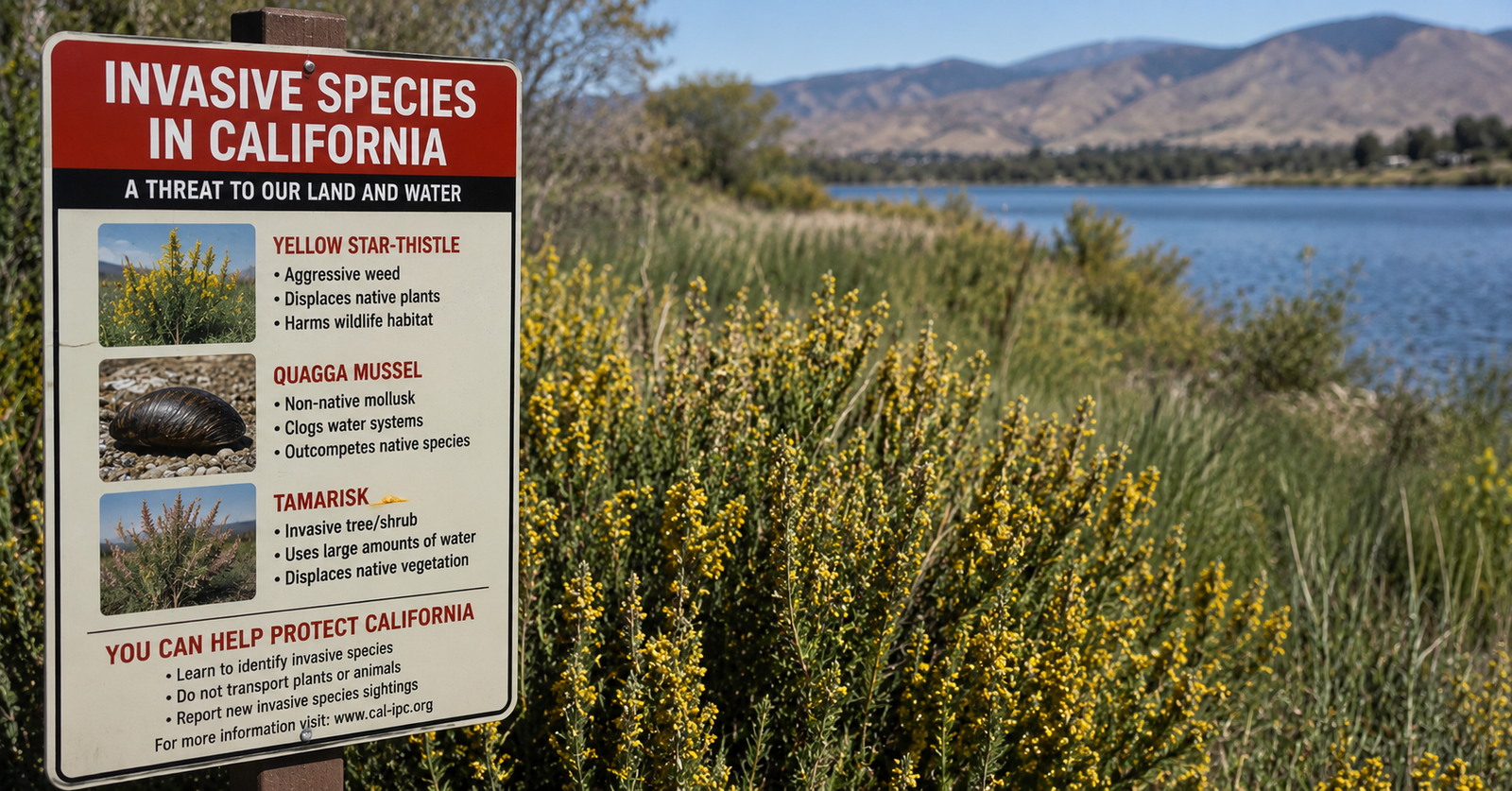
These freshwater mussels are among the most concerning aquatic invaders. Originally from Eurasia, they attach themselves to boats, pipes, and infrastructure. Their rapid reproduction can clog water delivery systems and significantly increase maintenance costs.
In addition to economic damage, they alter aquatic food webs by filtering large amounts of plankton from the water. This change affects fish populations and other native aquatic organisms.
H3: Argentine Ants
Argentine ants have spread across many California communities and natural areas. Unlike native ant species, they form massive interconnected colonies that can dominate entire landscapes.
Their presence disrupts local ecosystems because they outcompete native ants and interfere with important ecological relationships involving insects, plants, and wildlife.
H3: Giant Reed
Known scientifically as Arundo donax, giant reed is a fast-growing plant commonly found near rivers and streams. It consumes large amounts of water and displaces native vegetation.
This invasive plant also contributes to wildfire risks because its dense growth can create large amounts of dry fuel during hot weather conditions.
H3: European Starling
The European starling is one of the most widespread invasive birds in North America. Introduced in the nineteenth century, it has successfully adapted to urban and rural environments throughout California.
Starlings compete with native birds for nesting sites and food resources. Their large flocks can also create challenges for farmers and property owners.
H2: Effects on Native Wildlife
One of the most serious consequences of invasive species in California is their impact on native wildlife populations. Many native species have evolved specialized relationships with particular habitats and food sources. When invasive organisms alter those conditions, survival becomes increasingly difficult.
Native fish may struggle when invasive predators enter waterways. Birds can lose nesting opportunities when invasive species occupy critical habitats. Plants that once supported pollinators may disappear as invasive vegetation spreads.
In some cases, invasive species can directly prey on native wildlife. In others, the damage occurs indirectly through habitat destruction or competition for resources. Regardless of the mechanism, the result is often a decline in biodiversity.
H2: Impact on Agriculture
California is one of the world’s leading agricultural regions, producing a vast variety of fruits, vegetables, nuts, and other crops. Invasive species pose a significant threat to this industry.
Certain insects feed directly on crops, reducing yields and increasing production costs. Invasive weeds compete with cultivated plants for nutrients, water, and sunlight. Some invasive pests can even spread diseases that affect entire agricultural sectors.
Farmers frequently invest substantial resources in monitoring and controlling invasive organisms. These efforts are necessary to protect both crop production and market stability.
The economic costs associated with invasive species management can reach millions of dollars annually, making prevention and early detection especially important.
H2: Environmental Consequences Beyond Wildlife
The effects of invasive species in California extend beyond individual plants and animals. Entire ecosystems can be transformed when invasive organisms become dominant.
Wetlands may lose native vegetation that provides shelter for birds and amphibians. Grasslands can become overrun with invasive plants that alter soil conditions. Forest ecosystems may experience increased fire risks due to the accumulation of highly flammable invasive vegetation.
Water resources are also affected. Some invasive plants consume significant amounts of water, placing additional pressure on already limited supplies. Others change river flows and alter aquatic habitats.
These environmental changes can have long-term consequences that persist for decades, even after management efforts begin.
H2: How Scientists and Agencies Respond
Researchers, conservation organizations, and government agencies work together to address invasive species challenges throughout California. Their efforts focus on prevention, early detection, rapid response, and long-term management.
Monitoring programs help identify new invasions before they become widespread. Scientists study species behavior, reproduction, and ecological impacts to develop effective control strategies.
Management approaches vary depending on the species involved. Mechanical removal, habitat restoration, biological control programs, and targeted treatments may all play a role in reducing invasive populations.
Public education also remains a critical component of successful management efforts. Community awareness helps prevent accidental introductions and encourages responsible environmental practices.
H2: The Role of Residents
Residents play an important role in limiting the spread of invasive species. Simple actions can make a significant difference.
Cleaning boats before moving them between waterways helps prevent the spread of aquatic invaders. Choosing native plants for landscaping reduces the risk of introducing potentially invasive species into local ecosystems. Reporting unusual plants or animals to appropriate authorities can assist early detection efforts.
Gardeners, hikers, anglers, and outdoor enthusiasts all contribute to conservation efforts when they follow recommended guidelines and remain aware of invasive species concerns.
Protecting California’s ecosystems is not solely the responsibility of scientists and government agencies. Community participation remains an essential part of long-term success.
H2: Looking Toward the Future
As global trade, travel, and climate conditions continue to evolve, the challenge of managing invasive species will likely become more complex. New species may arrive, and existing invasions could expand into previously unaffected areas.
Advances in technology, research, and environmental monitoring offer reasons for optimism. Improved detection methods and better scientific understanding are helping experts respond more effectively than ever before.
Continued investment in prevention and conservation will be essential for preserving California’s natural heritage. Protecting ecosystems today helps ensure healthier landscapes for future generations.
Conclusion
The issue of invasive species in California affects ecosystems, agriculture, wildlife, and communities across the state. From invasive mussels and ants to aggressive plants and non-native birds, these organisms have demonstrated how quickly ecological balance can be disrupted when species are introduced into unfamiliar environments.
Addressing the problem requires cooperation among scientists, policymakers, land managers, and residents. Through prevention, education, research, and responsible environmental stewardship, California can reduce the impacts of invasive species and protect its remarkable biodiversity.
As awareness grows and management strategies improve, there is hope that future generations will inherit healthier ecosystems capable of supporting the rich variety of native plants and animals that make California unique.
FAQ
What are invasive species in California?
Invasive species are non-native plants, animals, or other organisms that spread rapidly and cause environmental, economic, or ecological harm within California.
Why are invasive species a problem?
They can outcompete native species, damage habitats, reduce biodiversity, impact agriculture, and increase management costs for communities and government agencies.
What is an example of an invasive species in California?
Examples include zebra mussels, quagga mussels, Argentine ants, giant reed, and European starlings.
How do invasive species enter California?
Many arrive through international trade, transportation, imported plants, shipping activities, recreational equipment, and accidental human movement.
Can invasive species be eliminated completely?
Complete elimination is often difficult once a species becomes established. However, early detection, rapid response, and effective management can significantly reduce their impact.