


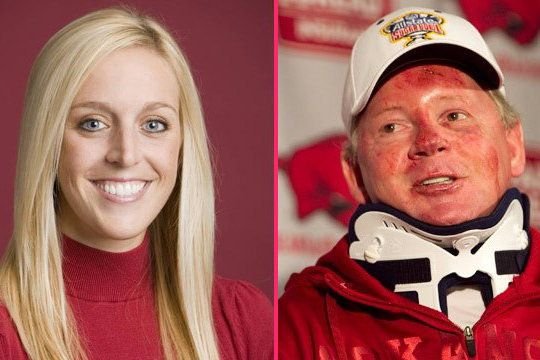
Jessica Dorrell became a household name in 2012 when a single motorcycle accident exposed a hidden relationship that shook the world of college football. While her name often surfaces alongside former Arkansas head coach Bobby Petrino, there is far more to the story than a sensational headline.
This article explores who Jessica Dorrell is, the events that led to national attention, and what we can learn from the saga more than a decade later.
Early Life and Education
Before the scandal that placed Jessica Dorrell on national sports pages, she was known in Arkansas primarily as a standout student-athlete.
Raised in the Natural State, Dorrell attended the University of Arkansas, where she played collegiate volleyball. Teammates described her as driven, friendly, and highly competitive—traits that later helped her secure professional roles within the Razorback athletic department.
Her time as a student prepared her not just athletically but also professionally. With a degree in communications and experience working with sports programs, Dorrell had a résumé well suited for a career in college athletics.
Career at the University of Arkansas
After graduation, Jessica Dorrell returned to her alma mater to work in athletics administration.
She first joined the Razorback Foundation, a fundraising arm of the university’s sports programs, before earning a position as the Student-Athlete Development Coordinator for the football team in March 2012.
This new role placed Dorrell in direct contact with players, staff, and coaches, including head football coach Bobby Petrino. Her appointment was fast-tracked compared to typical university hiring processes, which later became a focal point of public discussion.
The Bobby Petrino Motorcycle Scandal
The turning point in Jessica Dorrell’s life came on April 1, 2012. Bobby Petrino was involved in a motorcycle accident on a rural Arkansas highway.
Initially, Petrino told reporters he was riding alone. Days later, a police report revealed that Jessica Dorrell had been a passenger.
The revelation led to further investigation and ultimately confirmed a personal relationship between Petrino and Dorrell—one that had not been disclosed to university officials during her hiring. Petrino also admitted to giving Dorrell a $20,000 “gift,” raising concerns about conflicts of interest and ethical violations.
Fallout from the Scandal
- Paid Administrative Leave: Jessica Dorrell was immediately placed on leave while the university conducted an internal review.
- Petrino’s Termination: Bobby Petrino was fired for failing to disclose the relationship and for misleading administrators.
- Public Scrutiny: Dorrell became the subject of intense media coverage, with national outlets dissecting her private life.
This incident transformed a private relationship into a national controversy, making Jessica Dorrell a reluctant public figure overnight.
Aftermath and Professional Life
In April 2012, Jessica Dorrell resigned from her position at the University of Arkansas. Reports indicated she received a modest settlement as part of her departure agreement, though exact figures varied across media sources.
Following the scandal, Dorrell deliberately stepped away from public life. Unlike Petrino, who eventually returned to coaching, she avoided interviews and refrained from leveraging the publicity. Friends and colleagues described her as focused on rebuilding her career and personal life outside the media glare.
Public Perception and Media Impact
The story of Jessica Dorrell illustrates how quickly private matters can become public in the age of social media.
Sports fans, bloggers, and national networks debated not only the ethical issues but also Dorrell’s character. While Petrino faced professional consequences, Dorrell endured widespread personal criticism despite being the less powerful party in the relationship.
Media scholars https://hospitalcentral.policia.gob.pe/ often cite the case as an example of gender imbalance in scandal coverage. Dorrell’s name trended online for weeks, while questions about institutional oversight received comparatively less attention.
Life After the Spotlight
More than a decade later, Jessica Dorrell has maintained a low profile. Reliable updates on her current career or location are scarce, reflecting her choice to prioritize privacy over publicity.
Some local reports suggest she pursued opportunities outside major college athletics, focusing instead on roles that allowed a fresh start.
Her retreat from public view underscores a critical point: while the scandal was headline news in 2012, life continues beyond viral moments. Dorrell’s decision to step back demonstrates resilience and the right to personal reinvention.
Key Lessons from the Jessica Dorrell Story
The saga of Jessica Dorrell offers several takeaways for professionals, universities, and the public:
- Transparency Matters – Failure to disclose relationships in the workplace can lead to ethical and legal consequences.
- Media Can Amplify Personal Pain – Public fascination with scandal often overshadows the individuals involved.
- Second Chances Exist – Both Dorrell and Petrino illustrate that careers and personal lives can recover, though the paths differ.
- Privacy Is a Choice – Dorrell’s post-scandal life reminds us that stepping away from fame is possible, even in a digital age.
Frequently Asked Questions
Who is Jessica Dorrell?
Jessica Dorrell is a former University of Arkansas athletics staff member who gained national attention in 2012 due to her relationship with football coach Bobby Petrino.
What was Jessica Dorrell’s role at Arkansas?
She served as the Student-Athlete Development Coordinator for the Razorback football program after previously working with the Razorback Foundation.
What happened in the motorcycle accident?
On April 1, 2012, Dorrell was a passenger on Bobby Petrino’s motorcycle when they crashed. The incident exposed their undisclosed relationship.
Did Jessica Dorrell face legal charges?
No. The controversy centered on ethical and professional issues rather than criminal charges.
Where is Jessica Dorrell now?
Her current location and career are private. Publicly available information after 2012 is limited.
Conclusion
The name Jessica Dorrell will forever be linked to one of college football’s most infamous scandals. Yet her story is more than a footnote in sports history.
It is a cautionary tale about workplace ethics, the power of transparency, and the right to reclaim one’s narrative after public scrutiny.
As time passes, Jessica Dorrell stands as a reminder that people are more than the headlines they once occupied.
