

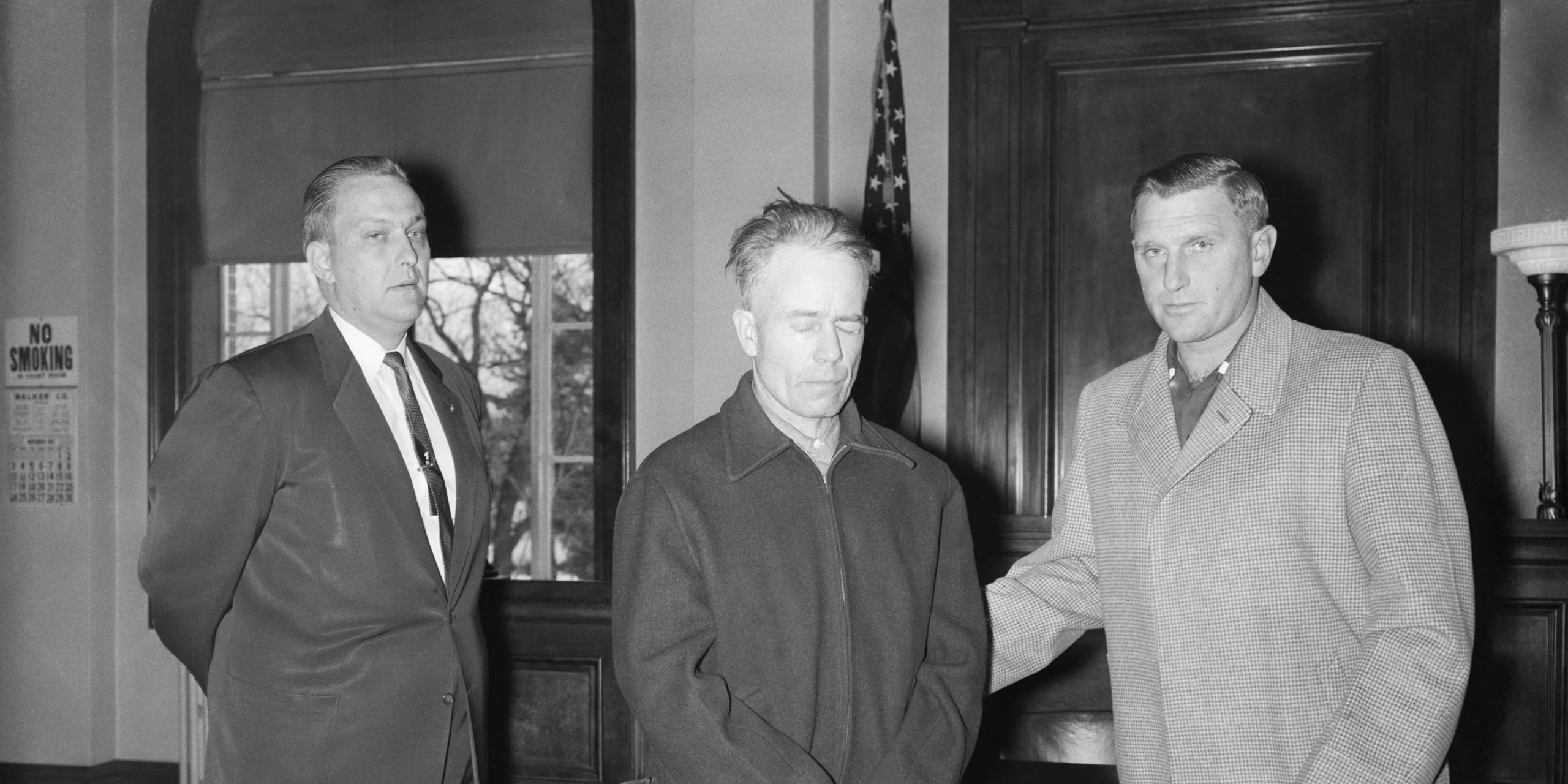
Did Ed Gein Help Find Ted Bundy?
The connection between notorious serial killers has always intrigued true crime enthusiasts and researchers. One such curiosity revolves around the question: Did Ed Gein help find Ted Bundy? The notion seems both perplexing and fascinating, given that Gein and Bundy were notorious in different eras, with vastly different methods of committing their heinous crimes. However, the intersection of their cases may reveal surprising connections that shed light on the criminal investigations of their time. This article explores the relationship, investigation procedures, and chilling similarities between these two infamous figures, uncovering the truth behind this curious question.
Who Was Ed Gein?
Before delving into whether Ed Gein helped find Ted Bundy, it’s essential to understand who Ed Gein was and how his crimes contributed to the development of modern criminal profiling. Known as the “Butcher of Plainfield,” Gein was an American serial killer and body snatcher whose crimes shocked the nation. Operating in the 1950s in rural Wisconsin, Gein was found guilty of murdering at least two women, but his gruesome actions extended far beyond just murder.
Gein’s most infamous acts were his disturbing body mutilations, where he exhumed corpses from local cemeteries and used their skin and body parts to craft grotesque items such as lampshades, belts, and masks. His chilling acts inspired countless fictional characters, including Norman Bates from Psycho and Leatherface from The Texas Chainsaw Massacre. Though his body count was relatively low compared to other serial killers, his depravity made him a pivotal figure in shaping the psychological understanding of serial offenders.
Who Was Ted Bundy?
Ted Bundy, on the other hand, was a far more publicized and notorious serial killer. Active during the 1970s, Bundy was responsible for the abduction, assault, and murder of over 30 young women across several states in the United States. His ability to blend into society, combined with his charm and manipulative demeanor, made him a terrifying figure who evaded capture for years.
Bundy’s crimes ranged from brutal physical attacks to meticulous planning, often involving luring victims with feigned injuries or impersonating authority figures. His capture, trial, and eventual execution in 1989 have become the stuff of criminal lore, and his case has been studied extensively to understand the psychology of violent offenders.
The Connection: Did Ed Gein Help Find Ted Bundy?
At first glance, it seems implausible that Ed Gein could have played a role in the capture of Ted Bundy. Gein’s crimes occurred decades before Bundy’s killing spree, and the two men had no direct contact with one another. However, there are indirect connections that intertwine their cases, particularly in the development of criminal profiling and investigative techniques used to catch serial killers.
Profiling and Criminal Investigation Techniques
Ed Gein’s case was one of the first in the United States to draw attention to the psychology of a serial killer. It marked a shift in how law enforcement and psychologists approached criminal investigations. The gruesome details of Gein’s crimes highlighted the need for a more detailed psychological profile of killers, especially those with specific patterns or rituals.
By the time Bundy began his killings, law enforcement was beginning to understand the need for profiling. The FBI’s Behavioral Science Unit (BSU), led by experts like John Douglas, was in its infancy. They relied heavily on the lessons learned from earlier cases like Gein’s to develop better strategies for understanding serial offenders. Bundy, with his manipulative tactics and distinct behavioral patterns, fell into the growing awareness of how such killers operate, all influenced by earlier cases, including Gein’s.
The Role of Ed Gein’s Case in Shaping Investigations
The Ed Gein case brought forward a critical realization for law enforcement: serial killers often share behavioral traits and psychological characteristics. Investigators began to look at crimes in a new light, seeking patterns and psychological motivations rather than merely focusing on the physical evidence. By the time Bundy was apprehended, the FBI had developed more advanced methods for analyzing the profiles of serial killers, which were likely influenced by earlier cases such as Gein’s.
Although Gein did not directly help capture Bundy, his case had an enduring influence on criminal psychology and investigative methods. The insights gained from Gein’s case informed the growing field of criminal profiling, which eventually aided in Bundy’s arrest.
The Psychological Similarities Between Ed Gein and Ted Bundy
While Gein and Bundy operated in different time periods and used different methods of murder, they shared several disturbing psychological traits that were of significant interest to criminal profilers:
Power and Control
Both Gein and Bundy exhibited a desire for control over their victims, but the way they exerted power differed. Gein’s need for control was evident in his body-snatching and the creation of grotesque artifacts from human remains. Bundy, on the other hand, sought control through manipulation and dominance over his victims. This psychological element of power was one of the key factors that criminal profilers focused on when studying both men.
Charismatic and Deceptive
While Gein did not exhibit the same level of charm as Bundy, he did deceive local authorities and the community. Gein maintained a façade of normalcy, which enabled him to carry out his crimes without raising suspicion. Bundy, however, was a master of charm and deception. His ability to manipulate people and present himself as a likable, harmless individual was one of the main reasons he was able to evade capture for so long. Investigators later learned that Bundy’s personality was one of the defining traits of many serial killers.
Disturbing Fetishes and Obsessions
Gein’s crimes were heavily tied to his disturbing fetishes, such as creating items from human flesh and bones. Similarly, Bundy’s obsession with power and control over women led him to commit violent acts. Both killers were driven by disturbing desires that led them to commit horrendous acts, which were analyzed closely by criminal psychologists.
Conclusion: The Indirect Connection Between Gein and Bundy
In conclusion, the question of whether Ed Gein helped find Ted Bundy is based more on the evolution of investigative techniques than any direct interaction between the two men. While Gein’s crimes were decades earlier, they played a critical role in shaping the development of criminal profiling, which ultimately aided in Bundy’s capture. By examining the psychological traits shared by both killers and the investigative lessons drawn from Gein’s case, law enforcement was better equipped to identify and apprehend Bundy.
Although Gein did not play an active role in Bundy’s arrest, the psychological insights gained from his case were instrumental in understanding the minds of serial killers, which directly contributed to the techniques used to catch Bundy. The cases of these two criminals are a reminder of the complexities of criminal investigation and the lasting influence one case can have on future investigations.
FAQ
1. Did Ed Gein help in any criminal investigations?
While Gein did not directly assist in investigations, his case was pivotal in shaping the development of criminal profiling and psychological analysis used in future cases, including Ted Bundy’s.
2. How did Ed Gein influence modern criminal investigations?
Gein’s case showed the need for psychological profiling of serial killers. Investigators began focusing on understanding the motives and patterns of killers rather than just physical evidence, paving the way for modern criminal profiling.
3. What is the connection between Ed Gein and Ted Bundy?
The connection is indirect. Ed Gein’s crimes influenced criminal profiling techniques that were used to catch Ted Bundy, but the two men did not interact or directly influence each other’s actions.
4. What was the Behavioral Science Unit’s role in capturing Ted Bundy?
The FBI’s Behavioral Science Unit used profiling techniques developed from earlier cases, including Ed Gein’s, to analyze Bundy’s behavior and catch him.
5. Why is Ed Gein considered important in the study of serial killers?
Gein is considered one of the first cases to provide deep psychological insights into the minds of serial killers. His case highlighted the importance of understanding the motives and behaviors behind such crimes.